HUNTERSVILLE · WATER DAMAGE · UPDATED NOV 2026
Huntersville water damage restoration, picked for you in one call.
Tell us what happened and your neighborhood. We recommend one licensed local water damage pro who handles that job and connect you on the same call.
Free · No forms · Open 24/7
What's going on?
Tap the closest match. We'll connect you with the right local plumber.
How do you find reliable water damage restoration in Huntersville?
Hire a company with IICRC certification and liability insurance. Huntersville sits near Lake Norman, the Catawba River, and Torrence Creek, and approximately 6.6% of properties face flood risk in 2025. Clay-rich soil holds water and increases basement wall pressure. Confirm the company follows IICRC S500 drying standards and will document moisture readings before reconstruction. Prices checked November 2026.
Plumbing services in Huntersville
- 01
Emergency leaks & burst pipes
Fast response for active leaks, burst pipes and shutoff help.
- 02
Drains & sewer
Clogged drains, sewer backups, hydro-jetting and camera inspections.
- 03
Water heaters
Repair, replacement and heat pump water heater installs.
- 04
Repipes & remodels
Whole-home repipes in copper and PEX, plus remodel rough-in.
- 05
Fixtures & gas
Faucets, toilets, gas line work and permit-required installs.
- 06
Diagnostics & camera inspection
Sewer camera, leak detection and acoustic locating before any repair.
By the numbers
- 6.6%Huntersville properties at flood risk in 2025.Dry Pro Systems
- 43.65"Annual precipitation Huntersville receives.Time and Date
- $60MProperty damage from July 1997 Mecklenburg flood.U.S. Geological Survey
- IICRC S500North Carolina water damage restoration standard.North Carolina Restoration Authority
Need a water damage pro in Huntersville? One call. One licensed local.
Homeowners: we match you to a vetted local water damage contractor, free.
Homeowner guide · Updated November 10, 2026
Huntersville homeowner guide
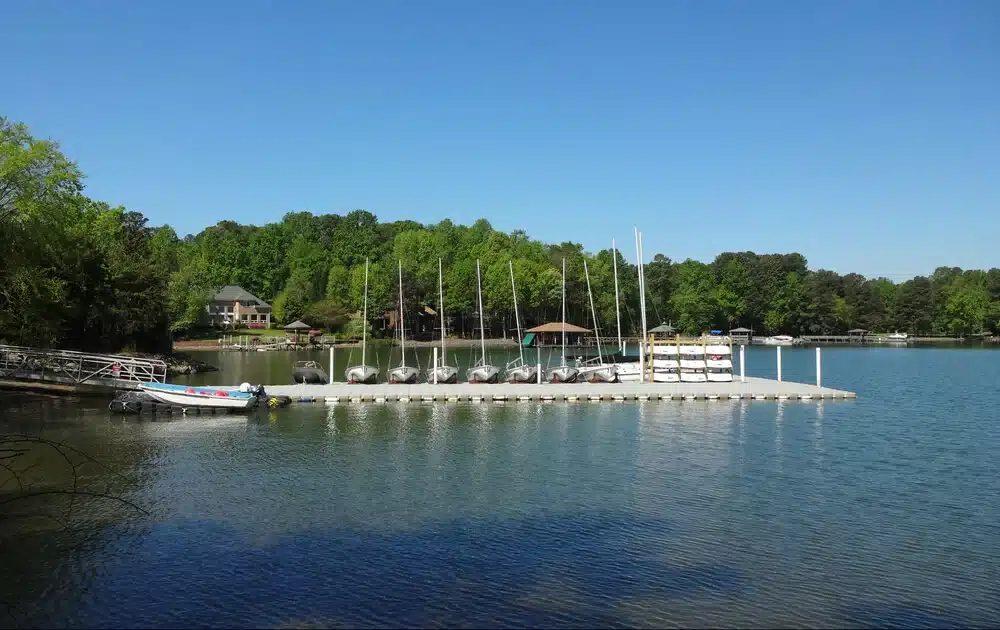
Huntersville sits near Lake Norman, the Catawba River, Mountain Island Lake, Torrence Creek, and McDowell Creek. Approximately 6.6% of properties face flood risk in 2025. Clay-rich soil holds water and expands, increasing pressure on basement walls. High groundwater tables cause ponding in low-lying areas during heavy rain. The humid subtropical climate keeps humidity elevated year-round, raising mold risk after any water event. Licensed water damage pros across the region see these patterns.
Lake Norman and Catawba River flood history
Huntersville's proximity to Lake Norman, the Catawba River, Mountain Island Lake, Torrence Creek, and McDowell Creek creates flood risk during heavy rain. The July 1997 flood caused as much as $60 million in property damage across Mecklenburg County. Hurricane Florence in September 2018 impacted 3,294 properties countywide. Between 1999 and 2018, 70 flash floods killed three people and caused more than $12 million in property damage. If you see standing water in your basement or crawl space after a storm, call a licensed water damage pro for extraction and structural drying. Homeowners, call now and we will match you to a licensed local pro.
Clay soil and basement wall pressure
The clay-rich soil prevalent in Huntersville tends to hold water, causing expansion that increases pressure on basement walls. High groundwater tables contribute to ponding and flooding in low-lying areas, especially during periods of heavy rainfall. Watch for horizontal cracks in foundation walls, water seeping through basement floor joints, and musty odors. A licensed water damage company can extract standing water, dry the structure with commercial dehumidifiers and air movers, and document moisture readings before reconstruction begins. If mold appears after water damage, a Huntersville mold specialist can clean up affected areas.
IICRC S500 drying standards
Water damage restoration in North Carolina follows IICRC S500, the Standard for Professional Water Damage Restoration. Drying validation is required before reconstruction begins. Your restoration company should document moisture readings in walls, floors, and ceilings using moisture meters and thermal imaging. Structural drying typically takes three to five days depending on the extent of saturation and the materials affected. If a burst pipe caused the damage, a Huntersville plumber can repair the line after extraction is complete.
Substantial improvement and flood code compliance
In flood hazard areas, repairs that constitute substantial improvement require the building to comply with Section R322 of the International Residential Code. Substantial improvement is defined as repair costs equaling or exceeding 50% of the structure's pre-damage market value. If your restoration estimate crosses that threshold, the Town of Huntersville building department may require full code upgrades including elevation or flood-proofing. Your restoration company should coordinate with the building department before starting work. Charlotte-Mecklenburg Storm Water Services can be reached at 311 or 704-336-7600 to report drainage or surface water pollution concerns.
Humid subtropical climate and mold risk
Huntersville experiences a humid subtropical climate with hot, humid summers and relatively mild winters. Humidity stays elevated through most of the year, creating conditions where mold can grow within 24 to 48 hours after water intrusion. If you see discolored drywall, peeling paint, or smell musty odors after a leak, call a licensed water damage pro immediately. IICRC-certified companies extract water, dry the structure, and monitor moisture levels to prevent mold growth. If an air conditioning condensate leak caused the damage, a Huntersville HVAC technician can repair the drain line after drying is complete.
Serving Huntersville neighborhoods
We dispatch licensed plumbers across these Huntersville neighborhoods:
- Birkdale Village
- Vermillion
- Gilead Ridge
- Wynfield
- Northstone
- Torrence Chapel
- Skybrook
- Bradford
- Hambright
- Ramah
- McCoy
- Holbrook
- Westmoreland
- Cedarfield
- Antiquity
- Monteith Park
- Coulwood
- Oakhurst
- Linwood
- Beatties Ford
Frequently asked questions
-
Does it cost anything to call?
No. The call is free and we are paid by the water damage company you are connected to, not by you. -
How do you choose which water damage company to recommend?
We check that the company holds active IICRC certification, that general liability insurance is on file, and that they handle your specific job and neighborhood. For Huntersville we prefer companies with experience responding to Lake Norman flooding, clay soil basement leaks, and the humid subtropical climate that raises mold risk. Approximately 6.6% of Huntersville properties face flood risk in 2025, so experience with extraction, structural drying, and IICRC S500 documentation matters. -
Do water damage companies in Huntersville need certification?
North Carolina does not require a state license for water damage restoration, but IICRC certification is the industry standard. IICRC S500 is the Standard for Professional Water Damage Restoration in North Carolina. Companies certified in Water Damage Restoration and Applied Structural Drying have passed exams and committed to continuing education. IICRC certification ensures the company follows drying validation protocols and documents moisture readings before reconstruction begins. -
How long does structural drying take?
Structural drying typically takes three to five days depending on the extent of saturation and the materials affected. Your restoration company should place commercial dehumidifiers and air movers, then monitor moisture readings in walls, floors, and ceilings using moisture meters and thermal imaging. Drying validation is required before reconstruction begins under IICRC S500. In Huntersville's humid subtropical climate, humidity stays elevated year-round, so controlled drying with equipment is critical to prevent mold growth. -
What is substantial improvement and when does it apply?
Substantial improvement is defined as repair costs equaling or exceeding 50% of a structure's pre-damage market value. In flood hazard areas, repairs that constitute substantial improvement require the building to comply with Section R322 of the International Residential Code. If your restoration estimate crosses that threshold, the Town of Huntersville building department may require full code upgrades including elevation or flood-proofing. Your restoration company should coordinate with the building department before starting work. -
Does Huntersville have a stormwater utility I can call?
Yes. Charlotte-Mecklenburg Storm Water Services is a joint municipal and county stormwater utility that serves Huntersville. The cost of the stormwater program is funded completely by a fee, not through tax dollars. You can call 311 or 704-336-7600 to report drainage or surface water pollution concerns. The utility manages stormwater infrastructure but does not provide emergency water damage restoration. For extraction and drying, call a licensed IICRC-certified water damage company. -
Will my number be sold to a bunch of contractors?
No. We connect you with one licensed water damage company on the same call. Your number is not sold to a list of contractors. We match you to a company that handles your specific job and neighborhood, then connect you directly.
Sources
- Dry Pro Systems, Huntersville flood risk
- Time and Date, Huntersville climate
- U.S. Geological Survey, 1997 Mecklenburg flood
- North Carolina Restoration Authority, IICRC S500 standard
- Mecklenburg County Government, Storm Water Services
- North Carolina Existing Building Code 2024
- WCNC, Mecklenburg County flood history
Need a Huntersville water damage now?
One call. One licensed local pro. Free to you.