Recognizing the signs air conditioner needs repair before a full breakdown can save you hundreds of dollars and prevent sweltering days without cool air. Common warning signals include warm air blowing from vents, strange sounds from the unit, sudden spikes in your energy bills, and short cycling where the system turns on and off too frequently. These symptoms rarely resolve on their own and often worsen the longer they go unaddressed.
A malfunctioning air conditioner is not just an inconvenfort issue; it can compromise indoor air quality, humidity control, and even structural materials in your home if moisture problems develop. Licensed HVAC technicians have the diagnostic tools and training to identify root causes quickly and safely, protecting your system from further damage and your household from unnecessary risk.
What Unusual AC Sounds Should Homeowners Never Ignore?
What are the signs air conditioner needs repair? Your air conditioner is designed to operate quietly in the background. When it starts producing sounds outside of the normal hum of a running motor, that noise is your system signaling a mechanical problem that needs professional attention. Banging, clanking, rattling, squealing, hissing, and clicking sounds all point to different underlying issues, and diagnosing them correctly requires hands-on inspection by a licensed HVAC technician.
A banging or clanking noise often indicates a loose or broken component inside the compressor, such as a connecting rod or piston pin. A high-pitched squealing sound typically points to a failing belt or motor bearing. Hissing sounds can suggest a refrigerant leak, which is both a performance problem and a health concern. Clicking at startup is normal, but persistent clicking during operation may indicate an electrical relay failure.
Ignoring any of these sounds can cause a minor repair to escalate into a compressor replacement, which averages $1,600 and can reach $2,400 or more with parts and labor.
Licensed HVAC contractors use pressure gauges, electrical testers, and visual inspections to isolate the source of unusual sounds. They can distinguish between a loose panel screw and a failing motor bearing without guessing. To learn more about how professional HVAC services address these kinds of problems, visit the HVAC services available through American Home Quotes to understand the full range of repairs vetted technicians can perform.
Working with a pre-screened professional rather than an unverified handyman ensures that repairs are completed to code and backed by workmanship guarantees.
Why Is Warm Air From Your AC Vents a Red Flag for Repairs?
When your air conditioner blows warm or room-temperature air from the vents, it is one of the clearest signs that something has gone wrong with core system components. This symptom does not mean the thermostat simply needs adjusting. It usually points to low refrigerant levels, a failing compressor, dirty evaporator coils, or restricted airflow caused by a clogged filter or blocked ductwork. Each of these issues requires a different repair approach, and misdiagnosing the cause can lead to costly repeated service calls.
Low refrigerant is one of the most common culprits. Refrigerant does not deplete over time under normal conditions; if it is low, there is a leak that must be located and repaired before the system is recharged. A certified technician must handle refrigerant because it is a regulated substance under EPA guidelines.
Dirty evaporator coils reduce the system’s ability to absorb heat from indoor air, causing the unit to run longer cycles while still delivering poor cooling. Homeowners who avoid one of the most common HVAC mistakes homeowners make — such as skipping annual maintenance — are far less likely to experience warm air output problems.
A licensed HVAC technician will check refrigerant pressure, inspect coils, test the compressor, and evaluate airflow in a single visit. This systematic approach prevents guesswork and ensures the actual source of warm air is corrected, not just masked. Hiring a vetted professional through a trusted referral platform removes the risk of working with underqualified technicians who might recharge refrigerant without fixing the underlying leak, leaving you with the same problem weeks later.
How Do Rising Energy Bills Signal That Your AC Needs Immediate Service?
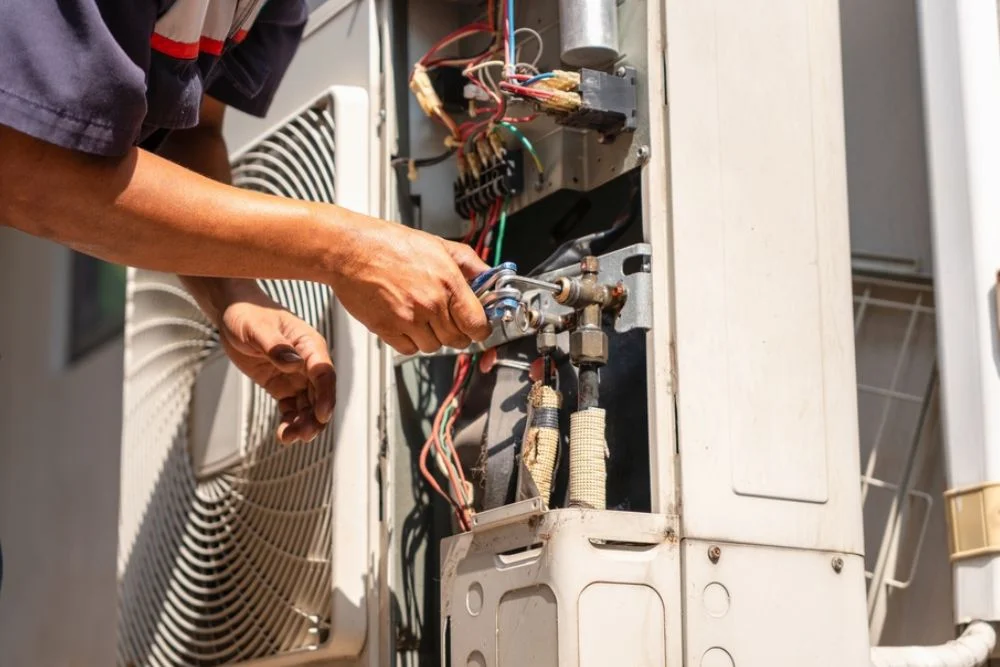
A sudden or gradual increase in your monthly electricity bill without a change in usage habits is a reliable indicator that your air conditioner is working harder than it should. When components like the compressor, capacitor, or blower motor begin to fail, the system compensates by running longer cycles and drawing more power to achieve the same cooling effect. That extra energy consumption shows up directly on your utility bill.
Several underlying conditions drive up AC-related energy costs, and a professional inspection can identify them quickly. The most common include:
- Dirty or clogged air filters restricting airflow and forcing the blower to work overtime
- Refrigerant leaks causing the compressor to run continuously without reaching the set temperature
- Failing capacitors preventing motors from starting and running efficiently
- Dirty condenser coils trapping heat and reducing the system’s ability to expel it outdoors
- Duct leaks losing conditioned air before it reaches living spaces
If your system is more than 10 to 15 years old and energy bills continue climbing despite maintenance, replacement may be more cost-effective than repeated repairs. A useful benchmark is the $5,000 rule: multiply your system’s age by the estimated repair cost, and if that number exceeds $5,000, investing in a new unit is usually the smarter financial decision.
Understanding how long an HVAC system should last can help you weigh repair costs against replacement value before committing to either option. A licensed HVAC professional can provide an honest assessment of your system’s remaining useful life and help you make the most cost-effective decision.
When Should You Call a Licensed HVAC Contractor Instead of Waiting?
Some AC problems allow a short window to troubleshoot before calling for help. Others demand immediate professional intervention. If you notice warm air, strange odors, ice forming on your outdoor unit, or water pooling near your indoor air handler, waiting even a few days can allow minor issues to cascade into major system failures. The first things to check on your own are the thermostat settings, the air filter, and the circuit breaker. If those are all normal and problems persist, it is time to contact a licensed technician.
Foul or musty odors from vents often signal mold growth inside the ductwork or on evaporator coils, which poses a direct health risk for your household. Short cycling, where the unit turns on and off rapidly without completing a full cooling cycle, can burn out the compressor prematurely. Excess moisture or water leaks near the air handler usually indicate a clogged condensate drain line, which, if left unaddressed, can cause water damage to ceilings, walls, and flooring. These are not problems to monitor and hope resolve on their own.
Choosing the right contractor matters as much as calling one promptly. Unvetted technicians may misdiagnose problems, use inferior parts, or perform repairs that void your manufacturer’s warranty. When evaluating whether to repair or replace your current system, a licensed contractor can also advise on the right time to upgrade your HVAC system based on your unit’s age, condition, and efficiency ratings.
American Home Quotes connects homeowners with pre-screened HVAC professionals who carry proper licensing, insurance, and verifiable track records, so you can move forward with confidence rather than uncertainty.
Frequently Asked Questions About AC Repair Warning Signs
Homeowners dealing with air conditioner problems often have urgent questions about what to do next, and these answers address the most common ones:
-
What Is the First Thing to Check When My AC Stops Working?
Start by verifying your thermostat is set to “cool” and the temperature is lower than your current indoor reading. Next, check the air filter for clogs and inspect your electrical panel for a tripped circuit breaker before calling a technician.
-
What Is the Most Common Problem That Causes AC to Fail?
A dirty or clogged air filter is the single most frequent cause of air conditioner performance problems. Other common culprits include low refrigerant, dirty coils, capacitor failure, and clogged condensate drain lines.
-
How Often Should an Air Conditioner Be Serviced?
Most residential AC systems should be professionally serviced once per year, ideally in the spring before peak cooling demand. Homeowners in hot or humid climates benefit from twice-yearly maintenance to keep the system running efficiently.
-
Is It Worth Repairing an AC Unit That Is 20 Years Old?
A 20-year-old unit has already exceeded the typical 15 to 20-year lifespan of central air conditioning systems, making full replacement a more practical investment than major repairs. Small, inexpensive fixes may still be worthwhile, but ongoing costly repairs on an aging system rarely pay off.
-
How Can I Tell If My AC Is Struggling to Keep Up?
Key indicators include longer-than-usual run times, weak or inconsistent airflow, warm air from vents, uneven cooling between rooms, and noticeably higher energy bills. Ice buildup on the outdoor unit and musty smells inside are also strong warning signs.
-
What Does the $5,000 Rule Mean for AC Repair or Replacement Decisions?
The $5,000 rule helps homeowners evaluate whether to repair or replace: multiply your system’s age in years by the estimated repair cost, and if the result exceeds $5,000, replacement is generally the more financially sound choice. A licensed HVAC contractor can help you run this calculation using accurate repair estimates and system age data.
Key Takeaways on Signs Air Conditioner Needs Repair
- Warm air from vents, unusual sounds, short cycling, and rising energy bills are all reliable signs air conditioner needs repair rather than simple adjustments
- Refrigerant leaks, dirty coils, failing capacitors, and clogged drain lines are among the most common causes of AC performance problems
- The $5,000 rule (system age multiplied by repair cost) is a practical benchmark for deciding between repair and full replacement
- Always check the thermostat, air filter, and circuit breaker first, but contact a licensed technician immediately if basic checks reveal no solution
- A system older than 15 years experiencing frequent breakdowns is typically more cost-effective to replace than to continue repairing
- Hiring a vetted, licensed HVAC contractor protects your warranty, ensures code-compliant work, and reduces the risk of recurring problems
Addressing air conditioner problems early keeps repair costs manageable and protects your system from irreversible damage. Most AC issues that go unresolved through a full summer season result in significantly higher repair bills or premature system failure.
When you are ready to schedule a professional inspection or get competitive quotes on AC repair, American Home Quotes makes it straightforward to find licensed HVAC contractors in your area. Call 1-877-648-1525 to speak with a representative who can connect you with pre-screened professionals ready to diagnose and fix your system.
American Home Quotes pre-vets every contractor in its network for proper licensing, insurance, and homeowner reviews, so you can hire with confidence and get your home comfortable again quickly.
External Sources
- BrokerCalls: Invest and Buy Quality HVAC Leads
- BrokerCalls: HVAC Leads