Finding a qualified HVAC contractor California homeowners can trust is one of the most consequential decisions you can make for your home’s comfort, safety, and energy costs. California’s climate varies dramatically from coastal fog to desert heat, and each region demands a contractor who understands local conditions, building codes, and utility rebate programs.
Working with a licensed, vetted professional protects you from substandard work, costly code violations, and equipment failures that can compromise indoor air quality or spike your energy bills. The right contractor brings not just technical skill but accountability, insurance, and a track record you can verify before anyone sets foot in your home.
Why Does Wildfire Smoke and Air Quality Call for Contractor-Grade Filtration?
California’s wildfire seasons have made indoor air quality a year-round concern for millions of homeowners. Smoke particles, ash, and fine particulate matter can infiltrate standard HVAC systems and circulate throughout your home, posing serious respiratory risks for children, elderly residents, and anyone with asthma or allergies.
A professional HVAC contractor can assess your current system’s filtration capacity, identify gaps in your ductwork, and recommend upgrades that protect your household from smoke infiltration. This is not a DIY job; improper filter installation can reduce airflow, strain your equipment, and actually worsen indoor air quality.
Contractor-grade filtration solutions go well beyond swapping out a standard 1-inch filter. Professionals evaluate your system’s MERV rating compatibility, install whole-home air purifiers, and can add UV germicidal lights or electrostatic filters that capture particles as small as 0.3 microns.
They also inspect and seal ductwork, which is a critical step since leaky ducts allow outdoor smoke to bypass even high-quality filters. Many contractors coordinate directly with utility companies to identify rebates on qualifying air quality equipment, saving you money upfront.
If your home sits in a fire-prone area or you notice musty odors, visible dust near vents, or family members experiencing unexplained respiratory irritation, these are clear signals that your HVAC system needs a professional air quality evaluation.
Explore the full range of professional HVAC services available to California homeowners to understand which filtration upgrades best match your home’s layout and existing equipment. Acting before peak fire season gives your contractor time to source the right components and complete the work without emergency pricing pressures.
What Should You Ask an HVAC Contractor About California’s Title 24 Code?
California’s Title 24 Building Energy Efficiency Standards are among the strictest in the country, and they directly affect every HVAC installation, replacement, and major repair performed in the state. Non-compliant work can result in failed inspections, voided equipment warranties, and costly retrofits that fall entirely on the homeowner.
A knowledgeable contractor should be able to explain how Title 24 applies to your specific project, whether that involves minimum equipment efficiency ratings, thermostat requirements, or duct sealing verification. If a contractor cannot answer basic questions about Title 24, treat that as a serious red flag.
When interviewing contractors, ask about their experience pulling permits for HVAC work in your county. California requires permits for most system replacements, and the permit process ensures an independent inspector verifies that the installation meets code.
Ask specifically about SEER2 ratings (the updated efficiency metric), refrigerant compliance with California’s HFC phase-down rules, and whether the proposed equipment qualifies for the state’s utility rebate programs through programs like BayREN or SoCalGas. A contractor who proactively brings up these details is demonstrating genuine expertise, not just technical competence.
Understanding which system features align with Title 24 can also affect your long-term operating costs significantly. Resources like finding the right HVAC system for your home’s unique needs can help you arrive at contractor conversations better prepared. Contractors who operate within a vetted network are consistently held to compliance standards, which protects you from liability and ensures your project passes inspection the first time.
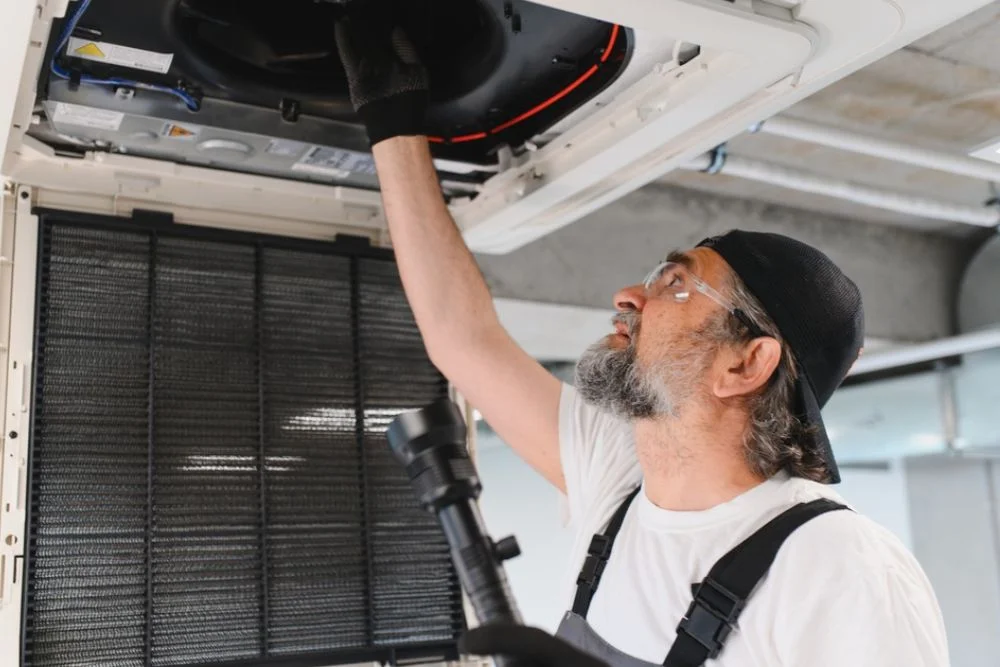
How Do You Verify an HVAC Contractor’s California License and Reviews?
Before you let any contractor touch your HVAC system, verifying their license through the California Contractors State License Board (CSLB) is a non-negotiable step. California requires HVAC contractors to hold a C-20 (warm-air heating and air conditioning) or C-38 (refrigeration) license, and you can confirm license status, expiration date, bonding, and any disciplinary actions directly on the CSLB’s public database at no cost.
Hiring an unlicensed contractor puts you at risk for incomplete work, no legal recourse if something goes wrong, and potential liability if a worker is injured on your property.
Beyond the license check, reviews and references provide a window into how a contractor actually performs on real jobs. Look for patterns across multiple review platforms rather than relying on a single source. Here are the key credentials and verification steps to complete before signing any contract:
- Confirm the contractor holds an active C-20 or C-38 license on the CSLB website
- Verify general liability insurance and workers’ compensation coverage
- Check for NATE (North American Technician Excellence) certification, which signals advanced technical training
- EPA 608 certification is required for any work involving refrigerants
- Request at least two local references from jobs completed in the past 12 months
- Review ratings on Google, Yelp, and the Better Business Bureau for consistent feedback patterns
Using a platform that pre-screens contractors for licensing, insurance, and reputation means you skip the most time-consuming parts of this process. When you connect with an HVAC contractor California residents can rely on through a vetted network, those credential checks have already been performed on your behalf.
You can visit licensed HVAC contractors serving California homeowners to start comparing vetted professionals in your area without doing the legwork alone.
Why Is a Local Contractor a Better Hire Than a National Chain in California?
National HVAC chains often advertise heavily and offer financing deals, but they frequently route work to subcontractors whose credentials, local knowledge, and accountability vary widely. A local contractor who has operated in your region for years understands California’s climate zones, local building department requirements, and the specific challenges your neighborhood presents.
They have established relationships with regional equipment suppliers, which can mean faster parts availability and better pricing for you. And because their reputation is built locally, they have a stronger personal incentive to get the job done right.
Local contractors also tend to be more responsive during California’s peak demand seasons, when temperatures spike and HVAC failures become urgent. A national company dispatching a technician from a distant location adds hours or days to your wait time. Local professionals can often provide same-day or next-day service because they are already operating in your area. This matters enormously when a broken system means dangerous heat exposure for elderly family members or young children.
The best approach is to use a matching service that combines the convenience of a large network with the quality assurance of local, pre-screened professionals. Through American Home Quotes’ HVAC contractor matching platform, homeowners connect with licensed local specialists who know California’s regulations and climate demands inside and out.
That combination of local expertise and verified credentials is what separates a stress-free installation from one that costs more to fix than it did to install. You deserve both convenience and accountability, and a local vetted contractor delivers both.
Frequently Asked Questions About California HVAC Contractor Hiring
These are the most common questions homeowners ask when hiring a licensed heating and cooling professional in California:
-
How Long Does It Take to Get HVAC Certified in California?
Certification timelines range from a few weeks for an EPA 608 credential to up to four years for a full C-20 or C-38 contractor’s license, which requires documented journey-level work experience. Trade school programs typically take six to twelve months and provide a solid foundation for entering the field.
-
Can HVAC Technicians Earn $100,000 or More Per Year?
Yes, six-figure incomes are achievable for experienced technicians who hold advanced certifications like NATE or EPA Universal and specialize in commercial or industrial systems. California’s high cost of living and strong demand for skilled trades make it one of the better-paying states for this career path.
-
What Is the $5,000 Rule for Deciding Whether to Repair or Replace an HVAC System?
Multiply your unit’s age in years by the estimated repair cost; if that number exceeds $5,000, replacing the system is usually the more cost-effective choice. A licensed technician can give you an honest assessment of your unit’s remaining useful life before you commit to either option.
-
Is the HVAC Industry in High Demand in California?
Demand for qualified HVAC professionals in California remains strong due to the state’s large housing stock, strict energy regulations, and expanding electrification mandates. A growing skilled-worker shortage means homeowners should book qualified contractors in advance, especially ahead of summer and winter peak seasons.
-
Will HVAC Technicians Be Replaced by Artificial Intelligence?
No credible evidence suggests AI will replace skilled HVAC technicians, whose work requires physical presence, hands-on problem-solving, and the kind of situational judgment no algorithm can replicate. AI tools are being adopted for scheduling, remote diagnostics, and dispatching, which actually helps technicians serve homeowners more efficiently.
-
What Are the Most Reliable HVAC Brands Recommended by Contractors?
Trane and Carrier are consistently ranked among the most dependable manufacturers, followed closely by American Standard, Rheem, and Daikin. Your local contractor can recommend a brand that pairs well with your home’s specific layout, California climate zone, and budget.
Key Takeaways on HVAC contractor California
- California’s wildfire seasons make contractor-grade filtration and duct sealing essential, not optional, for protecting indoor air quality.
- Title 24 compliance affects every HVAC installation and replacement; always hire a contractor who can pull permits and explain current efficiency standards.
- Verify any prospective contractor’s C-20 or C-38 license through the CSLB before signing an agreement, and confirm EPA 608 certification for refrigerant work.
- Local contractors offer faster response times, regional code knowledge, and stronger personal accountability than large national chains.
- Pre-screened contractor networks save homeowners time by completing credential and insurance verification before any connection is made.
- Investing in a qualified HVAC contractor California homeowners can verify upfront prevents costly repairs, failed inspections, and voided warranties down the road.
Your HVAC system is one of the largest mechanical investments in your home, and California’s regulatory environment makes professional installation and service more important than ever. The consequences of hiring an unqualified contractor from failed inspections to refrigerant violations can far outweigh any short-term cost savings.
When you are ready to move forward, compare residential HVAC installation services from pre-screened California contractors to find a professional who fits your timeline and budget. For immediate assistance connecting with a licensed local specialist, call 1-877-648-1525 to speak with a matching specialist today.
American Home Quotes connects homeowners across California with vetted, licensed HVAC professionals who meet strict standards for credentials, insurance, and customer satisfaction. There is no obligation and no cost to compare quotes, so you can make a confident hiring decision without the guesswork.
External Sources
- California Contractors State License Board: CSLB-Home -CSLB
- California Energy Commission: Building Energy Efficiency Standards
- Energy Star: Heat & Cool Efficiently