Finding a reliable HVAC contractor Texas homeowners can trust is one of the most urgent home service decisions you will face, especially when summer temperatures push past 100°F and your system fails without warning. Texas homes depend on high-performance cooling and heating equipment that handles relentless heat, high humidity, and wide seasonal swings.
A qualified HVAC professional brings the technical training, proper licensing, and hands-on experience needed to keep your system running safely and efficiently. Working with a vetted contractor means fewer callbacks, code-compliant installations, and repairs that hold up through the toughest Texas summers.
The consequences of hiring an unlicensed or underqualified technician range from voided equipment warranties to dangerous refrigerant leaks and costly code violations. Licensed contractors carry the liability insurance and certifications required by the Texas Department of Licensing and Regulation, protecting you financially if something goes wrong.
Connecting with pre-screened professionals through a trusted matching platform gives you access to verified credentials, competitive pricing, and faster service when you need it most.
Why Does Extreme Texas Heat Call for a Contractor Experienced With High-Demand Cooling?
Texas summers are not average. Cities like Houston, San Antonio, Dallas, and Austin regularly record heat indexes above 105°F for weeks at a time, placing HVAC systems under continuous, extreme stress. A standard system designed for moderate climates can fail quickly without proper sizing, maintenance, and installation for high-demand operation with a HVAC contractor Texas.
Contractors who work regularly in Texas understand how to select and configure equipment specifically for these conditions, from oversized condenser coils to enhanced airflow design that keeps indoor temperatures stable even during peak afternoon heat.
An experienced local contractor will perform a Manual J load calculation before recommending any replacement system. This calculation accounts for your home’s square footage, insulation levels, window orientation, and local climate data to size equipment accurately. Undersized units run constantly and wear out prematurely.
Oversized units cycle on and off too frequently, creating humidity problems and uneven comfort. Neither scenario is acceptable when outdoor temperatures are life-threatening. To explore what professional cooling services cover in your area, you can review HVAC system services available to Texas homeowners and compare options before committing.
High-demand cooling also requires contractors who stay current with evolving refrigerant regulations, including the industry’s transition away from R-22 and R-410A toward newer, lower-GWP refrigerants. Technicians must hold EPA Section 608 certification to legally handle refrigerants, and the best professionals keep their certifications updated as standards change.
When you hire through a vetted platform, those credentials are already verified, so you spend less time researching and more time getting your home back to a comfortable temperature.
What Should You Ask an HVAC Contractor About Humidity and Mold Prevention?
Texas humidity is a year-round problem, not just a summer inconvenience. Coastal and Gulf-adjacent regions regularly see indoor relative humidity climb above 60%, the threshold where mold spores begin to colonize wall cavities, ductwork, and air handlers.
A poorly maintained or incorrectly sized HVAC system accelerates this problem by failing to remove enough moisture from the air during operation. Before hiring any contractor, asking specific questions about humidity control reveals whether they have the experience your home actually needs.
The right questions to ask any HVAC contractor before scheduling work include:
- Do you measure indoor relative humidity as part of your diagnostic process?
- Can you install or integrate a whole-home dehumidifier with my current or new system?
- How do you check duct sealing and insulation for condensation buildup?
- What maintenance schedule do you recommend to prevent mold growth in the air handler?
- Have you worked in homes with previous mold remediation history?
If a contractor cannot answer these questions confidently, that is a warning sign. Mold that originates from HVAC neglect can spread quickly behind walls and inside ductwork, creating health hazards that go far beyond discomfort. If your system has already been struggling to manage indoor moisture, a professional mold inspection may be warranted alongside your HVAC service.
You can connect with specialists who offer professional mold inspection services to assess whether your home needs remediation before or after new equipment is installed. Addressing both issues together protects your family and your investment.
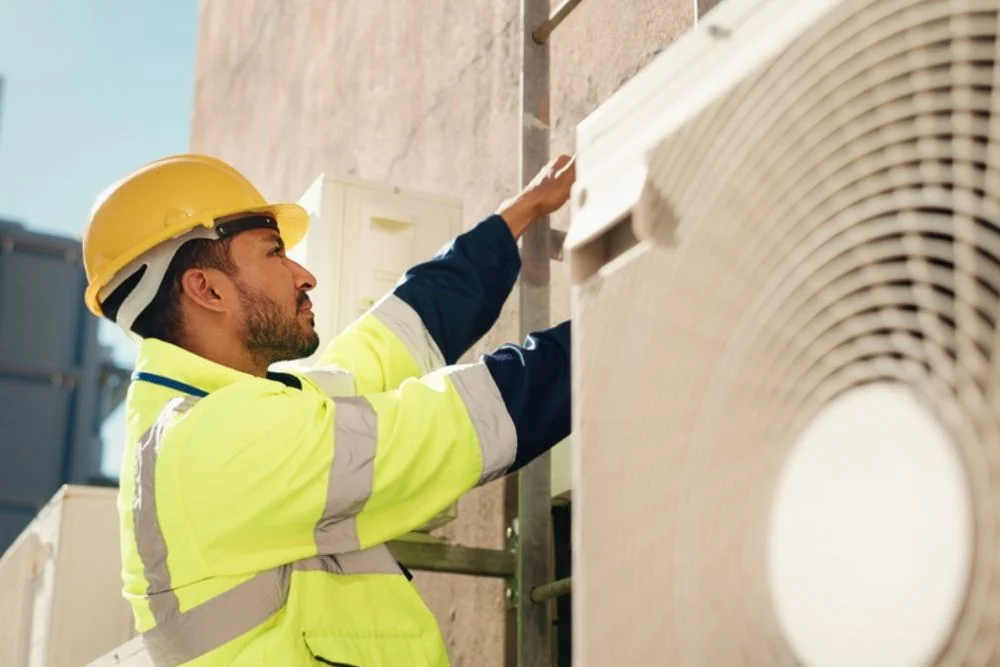
How Do You Verify a Texas HVAC Contractor’s License Through the TDLR?
Every professional who installs, repairs, or maintains HVAC equipment in Texas must hold a valid license or registration issued by the Texas Department of Licensing and Regulation. The TDLR oversees multiple license tiers, including the Class A and Class B Air Conditioning and Refrigeration Contractor licenses, as well as the entry-level Technician registration.
Verifying a contractor’s standing with the TDLR takes only a few minutes and can save you from costly and potentially dangerous work performed by unqualified individuals.
To check a contractor’s license status, visit the TDLR license verification portal at tdlr.texas.gov and search by name, license number, or business name. A valid license confirms that the contractor has passed a state exam, demonstrated the required years of supervised experience, and maintains the liability insurance required by law.
Contractors holding Class A licenses can work on commercial and residential systems of any capacity. Class B licenses cover residential equipment up to 25 tons. An entry-level technician registration allows supervised fieldwork but does not qualify someone to operate independently on your home.
Beyond state licensing, look for contractors who carry EPA Section 608 certification, manufacturer-specific training certifications, and current liability and workers’ compensation insurance. Hiring someone without workers’ comp coverage could expose you to legal liability if a technician is injured on your property.
When you use a matching service, these credentials are pre-verified before a contractor ever contacts you. To find licensed professionals serving your zip code, you can browse vetted HVAC contractors across Texas and request quotes with confidence knowing each provider has been screened for credentials and service quality.
Why Does a Fast-Responding Local Contractor Matter More in Texas Summers?
When your air conditioning stops working on a July afternoon in Texas, every hour without cool air matters. Heat-related illness can develop quickly in a sealed home with no cooling, particularly for elderly residents, young children, and people with medical conditions.
A local contractor who knows your region’s infrastructure, common equipment brands, and typical failure points can diagnose and resolve problems faster than a distant company dispatching technicians from hours away. Response time is not just a convenience factor in Texas, it is a safety consideration.
Local contractors also maintain relationships with regional suppliers, meaning they can source parts faster when uncommon components are needed. They are familiar with the utility programs offered by Oncor, CPS Energy, and other Texas providers, and they can recommend qualifying equipment for rebates that offset your replacement costs.
Choosing the right system type matters as much as choosing the right contractor. If you are considering a system upgrade, reviewing information on which type of air conditioner is best for your home can help you have a more informed conversation with any contractor you contact.
A fast-responding, locally experienced contractor is also more accountable. They have a local reputation to protect, community ties that matter, and a service area close enough to return for warranty work or follow-up visits.
Matching platforms that focus on geographic proximity and verified reviews make it significantly easier to identify these high-accountability contractors rather than gambling on a national service chain with no local investment in your satisfaction.
Frequently Asked Questions About Texas HVAC Contractor Licensing and Hiring
Homeowners searching for reliable HVAC help in Texas frequently ask these questions before making a hiring decision:
-
Can I legally work on my own HVAC system in Texas without a license?
Texas law allows homeowners to perform HVAC work on a single-family property they own and occupy without holding a state license. Any work performed on a rental property, commercial building, or by a hired individual requires proper TDLR licensing.
-
How hard is it to earn a contractor license for HVAC work in Texas?
Earning a Class A or Class B license requires four years of supervised field experience, a written exam with a passing score of 70% or higher, and proof of liability insurance. The entry-level technician registration is straightforward and costs approximately $20, making it a practical first step for those entering the trade.
-
How long does the full Texas HVAC contractor licensing process take?
Accumulating the required experience typically takes three to four years, and the application, exam scheduling, and license issuance process adds another one to three months. Planning early in your career helps avoid delays that could affect employment or contracting opportunities.
-
Is getting an HVAC certificate a worthwhile investment in 2026?
Yes, the field continues to grow with the Bureau of Labor Statistics projecting around 8% job growth through 2034, and programs typically take only six months to two years to complete. EPA Section 608 certification is legally required to handle refrigerants, making it a non-negotiable credential for anyone working in the trade.
-
Can an HVAC technician realistically earn $100,000 a year?
Top earners in the top 10% of the field report annual incomes between $91,000 and over $100,000, typically after five to ten or more years of experience. Specializations, overtime availability, and business ownership are the most common paths to reaching that income level.
-
Will AI technology replace HVAC technicians in the future?
No credible labor analysis supports that prediction, since the work requires physical presence, hands-on problem-solving, and real-time system diagnostics that cannot be automated. The Bureau of Labor Statistics projects approximately 11% employment growth in the field, adding nearly 48,200 positions over the coming decade.
Key takeaways on HVAC Contractors Texas
- Texas heat and humidity create uniquely demanding conditions that require experienced, locally knowledgeable contractors who understand high-capacity cooling needs.
- Always verify a contractor’s TDLR license status, EPA Section 608 certification, and insurance coverage before authorizing any work on your home.
- Asking contractors directly about humidity management and mold prevention can reveal whether they have the depth of experience your home requires.
- Fast local response time during summer outages is a safety priority, not just a convenience, especially for vulnerable household members.
- Using a vetted contractor matching service eliminates the credential verification burden and connects you with pre-screened professionals faster.
- Choosing properly sized and energy-efficient equipment, guided by a qualified contractor, protects your warranty and reduces long-term operating costs.
Making the right hiring decision for your home’s comfort system is one of the most impactful choices a homeowner can make. Verified credentials, local experience, and honest communication are the foundation of any trustworthy contractor relationship. Taking a few extra steps to confirm licensing and ask the right questions before work begins pays dividends for years.
When you are ready to connect with licensed HVAC contractor Texas professionals in your area, American Home Quotes makes the process straightforward and stress-free. Homeowners can call 1-877-648-1525 to speak with a representative or submit their zip code online to receive free, no-obligation quotes from pre-screened contractors.
American Home Quotes verifies credentials, compares providers, and connects you to qualified professionals so you can focus on what matters most: keeping your home safe and comfortable.
External Sources
- Texas Department of Licensing and Regulation: Texas Department of Licensing and Regulation – Texas.gov
- Energy Star: Heat & Cool Efficiently
- Centers for Disease Control and Prevention: Facts About Stachybotrys chartarum