MIAMI GARDENS · WATER DAMAGE · UPDATED NOV 2026
Miami Gardens water damage restoration, picked for you in one call.
Tell us what happened and your neighborhood. We recommend one licensed local water damage pro who handles that job and connect you on the same call.
Free · No forms · Open 24/7
What's going on?
Tap the closest match. We'll connect you with the right local plumber.
How do you find a reliable water damage restoration company in Miami Gardens?
Hire a company with IICRC certification in water damage restoration and structural drying. Miami Gardens lies in a flat, low-lying area with groundwater just below the surface, so experience with basement flooding, mold prevention, and rapid extraction matters. About 99% of buildings in Miami Gardens are at high risk of flooding. Confirm they will pull the required building permit when removing water that presents danger or causes damage.
Plumbing services in Miami Gardens
- 01
Emergency leaks & burst pipes
Fast response for active leaks, burst pipes and shutoff help.
- 02
Drains & sewer
Clogged drains, sewer backups, hydro-jetting and camera inspections.
- 03
Water heaters
Repair, replacement and heat pump water heater installs.
- 04
Repipes & remodels
Whole-home repipes in copper and PEX, plus remodel rough-in.
- 05
Fixtures & gas
Faucets, toilets, gas line work and permit-required installs.
- 06
Diagnostics & camera inspection
Sewer camera, leak detection and acoustic locating before any repair.
By the numbers
- 99%Miami Gardens buildings at high risk of flooding.ClimateCheck
- 66.93 inchesAnnual precipitation in Miami Gardens.Time and Date
- 48 to 72 hoursTimeline for mold to form after water intrusion.PuroClean
- 82.8%Properties at risk of flooding over 30 years.First Street Foundation
Need a water damage pro in Miami Gardens? One call. One licensed local.
Homeowners: we match you to a vetted local water damage contractor, free.
Homeowner guide · Updated November 10, 2026
Miami Gardens homeowner guide
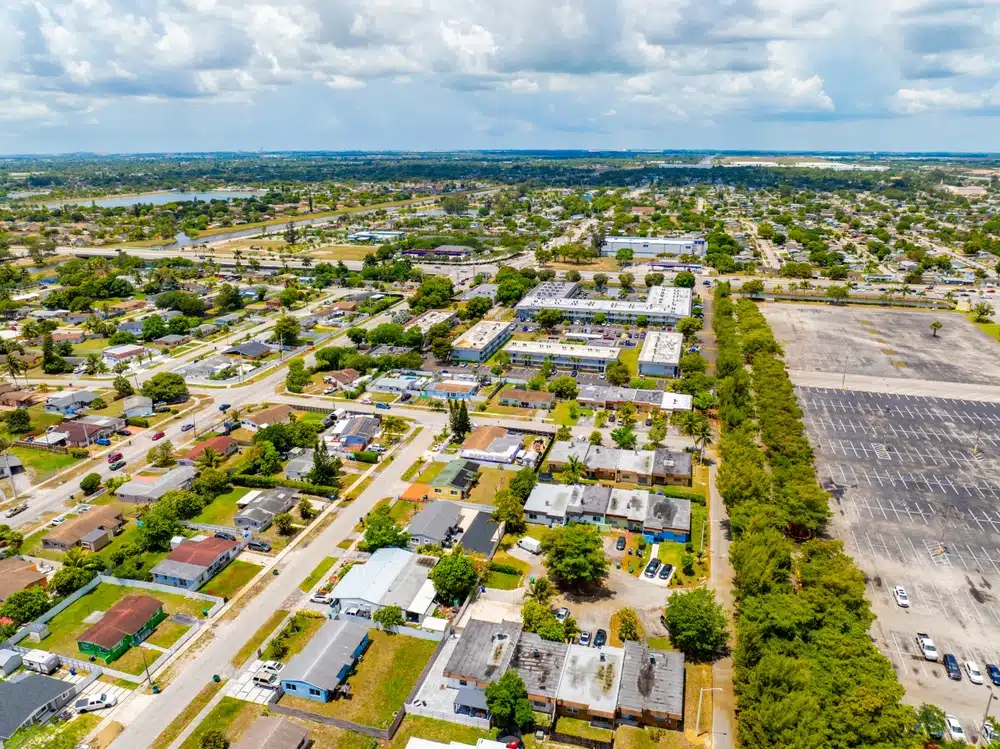
Miami Gardens lies in a flat, low-lying area of Miami-Dade County where groundwater sits just below the surface. About 99% of buildings here are at high risk of flooding, driven by tropical storms, hurricanes, and the 66.93 inches of rain that fall each year. During the rainy season, canals and lakes fill and the groundwater table rises close to the surface, making basement flooding and seepage common problems. Homeowners across the state face similar challenges, but Miami Gardens' low elevation and shallow water table create unique risks.
Flat terrain and shallow groundwater drive flooding
Miami Gardens sits in a flat, low-lying area where groundwater is just below the ground surface. During the rainy season, canals and lakes frequently fill with water and the groundwater table rises close to the surface. When heavy rainfall occurs, stormwater runoff has nowhere to drain, leading to localized flooding. Man-made canals such as the C-8 and C-9 could overtop their banks or get backed up. Properties here sit relatively close to groundwater, making basement flooding and seepage common, especially after heavy storms. A licensed water damage pro can extract standing water, dry structural areas, and prevent mold from forming within 48 to 72 hours.
Tropical storms and hurricane rainfall
Miami Gardens faces flood hazards from tropical storms, hurricanes, and other heavy rain events. Hurricane Wilma in October 2005 impacted 278 properties, and Hurricane Irma in September 2017 impacted 69 properties. The city usually has the most precipitation in June, August, and September, with an average of 24 rainy days and 7.8 inches of rain per month. Over the next 30 years, 82.8% of all properties in Miami Gardens will have risk of flooding. Buildings at risk average about a 57% chance of a flood about 1.0 feet deep over 30 years. If a hurricane or tropical storm causes flooding, a Miami Gardens roofing contractor can repair wind-damaged shingles that let rain inside.
Mold risk in high humidity climate
Miami Gardens features a tropical monsoon climate with high humidity and frequent rainfall. Moisture can accumulate in structural areas, promoting mold growth and structural weakening. Mold can form within 48 to 72 hours of water intrusion if not addressed swiftly. IICRC-certified water damage restoration technicians are trained in water extraction, structural drying, and mold remediation. A licensed pro will use dehumidifiers and air movers to dry walls, floors, and ceilings before mold takes hold. If mold has already formed, a Miami Gardens mold remediation specialist can remove it and treat affected surfaces. Homeowners nationwide find a licensed water damage pro to prevent mold after a flood or leak.
Building permits and Florida Building Code
Miami Gardens enforces the Florida Building Code, Miami Gardens Municode, and Code of Ordinances Chapter 8 Miami-Dade County. Building permits are required to remove water where it presents danger, causes damage and mold, or breeds improvements. Your water damage restoration company should obtain a building permit prior to starting work on the site. The permit ensures the work meets code and protects your home's structural integrity. Homeowners, call now and we will match you to a licensed local pro.
City stormwater system and drainage projects
The Stormwater Division of Miami Gardens is responsible for the planning, design, construction, operation, and maintenance of the city's stormwater system. To reduce street flooding, the city's Stormwater Utility is identifying, prioritizing, and implementing local drainage projects throughout the city. Residents can report unusual flooding by calling 305-622-8000, ext. 2648. If you witness anyone dumping anything into storm drains or waterways, call the County's Pollution Control phone number, 305-372-6955. A licensed water damage pro can help you document flooding damage for insurance claims.
Serving Miami Gardens neighborhoods
We dispatch licensed plumbers across these Miami Gardens neighborhoods:
- Andover
- Bunche Park
- Carol City
- Lake Lucerne
- Norland
- Norwood
- Scott Lake
- Golden Highland
- Biscayne River Gardens
- Miami Carol City
- Opa-locka North
- Palmetto Estates
- West Little River
- Westview
- Pinewood
- Sunshine Acres
- Venetian Gardens
- Andover Lakes
- Bunche Park West
- Carol City Gardens
Frequently asked questions
-
Does it cost anything to call?
No. The call is free and we are paid by the water damage restoration company you are connected to, not by you. -
How do you choose which water damage company to recommend?
We check that the company holds IICRC certification in water damage restoration and structural drying, that general liability insurance is on file, and that the company handles your specific job and neighborhood. For Miami Gardens we prefer companies with experience in basement flooding, mold prevention, and rapid extraction in high-humidity climates. About 99% of buildings in Miami Gardens are at high risk of flooding, so experience with tropical storm and hurricane damage matters. -
Do water damage restoration companies in Miami Gardens need a license?
Yes. Florida requires water damage restoration contractors to hold appropriate licensing and IICRC certification for water damage restoration, mold remediation, and structural drying. Miami Gardens enforces the Florida Building Code and requires building permits to remove water where it presents danger, causes damage and mold, or breeds improvements. Your water damage restoration company should obtain a building permit prior to starting work on the site. -
Do I need a permit for water damage restoration in Miami Gardens?
Yes. Miami Gardens requires building permits to remove water where it presents danger, causes damage and mold, or breeds improvements. The city enforces the Florida Building Code, Miami Gardens Municode, and Code of Ordinances Chapter 8 Miami-Dade County. Your water damage restoration company should pull the permit when the job requires one. The permit ensures the work meets code and protects your home's structural integrity. -
How fast can mold form after water damage in Miami Gardens?
Mold can form within 48 to 72 hours of water intrusion if not addressed swiftly. Miami Gardens features a tropical monsoon climate with high humidity and frequent rainfall, which can cause moisture to accumulate in structural areas and promote mold growth. IICRC-certified water damage restoration technicians use dehumidifiers and air movers to dry walls, floors, and ceilings before mold takes hold. A licensed pro will extract standing water, dry structural areas, and prevent mold from forming. -
What should I do if I see flooding in my neighborhood?
Call 305-622-8000, ext. 2648 to report unusual flooding in your area. The Stormwater Division of Miami Gardens is responsible for the planning, design, construction, operation, and maintenance of the city's stormwater system. If you witness anyone dumping anything into storm drains or waterways, call the County's Pollution Control phone number, 305-372-6955. A licensed water damage pro can help you document flooding damage for insurance claims. -
Will my number be sold to a bunch of contractors?
No. We connect you with one licensed water damage restoration company on the same call. Your number is not sold to a list of contractors. We match you to a company that handles your specific job and neighborhood, then connect you directly.
Sources
- ClimateCheck, Miami Gardens flood risk
- First Street Foundation, Miami Gardens flood data
- City of Miami Gardens, flood hazard
- City of Miami Gardens, stormwater system
- City of Miami Gardens, flood protection
- City of Miami Gardens, permits and enforcement
- Time and Date, Miami Gardens climate
- PuroClean, Miami Gardens water damage
- Mold Partners, Miami Gardens water damage restoration
Need a Miami Gardens water damage now?
One call. One licensed local pro. Free to you.