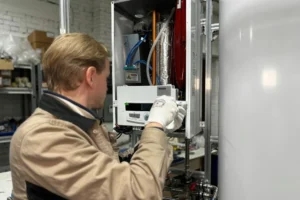
Comfort issues, strange noises, or rising energy bills can point to deeper system problems. Choosing the right HVAC repair contractor matters when comfort or safety is at stake. Variable refrigerant flow (VRF) technology offers precise zoning, whisper-quiet performance, and better humidity control when designed correctly. VRF is a heat-pump approach that modulates refrigerant flow so each indoor zone gets only the heating or cooling it needs.
How Does a VRF HVAC System Work?
A VRF system uses one or more outdoor inverter-driven condensers connected to multiple indoor fan coils by sealed refrigerant piping. Instead of blasting a fixed amount of air, the outdoor unit varies compressor speed to match the exact load. Electronic expansion valves in each indoor unit meter refrigerant precisely to that zone. Smart controllers read temperatures, occupancy, and sometimes humidity to fine-tune output in real time. Because the compressor modulates, the system avoids energy-wasting on and off cycles.
The piping network can be configured for heat pump or heat recovery operation. Heat recovery designs move heat from rooms that need cooling to rooms that need heating at the same time. This internal energy transfer reduces compressor work and improves seasonal efficiency. An experienced HVAC Repair Contractor can commission the network so sensors, control boards, and refrigerant charges align with manufacturer specs.
Airflow still matters because indoor coils must exchange heat efficiently. Correct static pressure, clean filters, and proper duct sizing protect capacity and comfort. Quiet operation results from steady compressor speeds and fewer high-speed fan events. Zoning also limits temperature swings that can stress building materials and disturb sleep. For project-ready guidance, compare options through our HVAC services directory at HVAC services, then ask candidates how they calculate loads and lay out refrigerant circuits.
How Is VRF Different from Traditional HVAC Systems?
Traditional split and packaged systems push a single supply air temperature to the whole home. They cycle on and off at full capacity, which can create drafts, noise, and temperature drift. VRF instead modulates compressor speed and refrigerant flow to match the load at each zone. This precision delivers steadier temperatures and lower sound levels in occupied rooms. Because the indoor units are decoupled, you can condition only the spaces you use. The result is comfort that adapts to real life rather than forcing the house to follow one setting.
Key technical differences to keep in mind during product selection and design are:
- Refrigerant moves energy directly, minimizing duct losses.
- Inverter compressors ramp up or down instead of hard starts.
- Heat recovery models heat and cool different zones simultaneously.
- Controls integrate with sensors for granular setpoints and schedules.
VRF does need careful engineering to prevent oil return issues and maintain proper line lengths. Installation quality dictates efficiency, reliability, and warranty protection. If a legacy furnace and central AC are failing, compare zoned retrofits against a high-efficiency two-stage replacement. Homeowners can review vetted residential HVAC repair options through reputable residential repair resources and ask each bidder to model room-by-room loads. Choosing an HVAC Repair Contractor who documents calculations, equipment submittals, and commissioning steps reduces risk during inspections and turnover. Good contractors also explain maintenance requirements and provide clear training on controls and app-based features.

What Are the Upfront Costs vs. Long-Term Savings of VRF?
Upfront VRF costs are typically higher than single-stage split systems because of inverter compressors, multiple indoor units, and sophisticated controls. Material costs include branch selector boxes, refrigerant piping, line insulation, and communication wiring. Labor adds design time for load calculations, line routing, brazing, pressure testing, evacuation, and commissioning. For a typical three to four zone residential application, installed prices often land above a premium conventional heat pump. Electrical work may require new circuits and surge protection to meet manufacturer and code requirements. If indoor air quality upgrades are added, budget for dedicated ventilation or energy recovery. These additions increase the initial price but can enhance comfort and resilience for years.
Long-term savings stem from part-load efficiency because the compressor rarely runs at full tilt. Energy use drops when only occupied rooms are conditioned and heat can be shared between zones. Avoiding duct losses also helps, especially in homes with attic or crawlspace duct runs. Maintenance savings can accrue from fewer emergency calls when controls prevent short cycling. Equipment life may extend due to smoother starts and lower average operating speeds. Utility incentives and tax credits can offset some of the upfront premium when efficiency thresholds are met. A simple payback analysis should include energy rates, climate, insulation levels, and realistic hours of use.
How Much Maintenance Does a VRF System Require?
VRF maintenance is predictable when the system is installed to spec and properly commissioned. Routine tasks focus on airflow, condensate management, electrical integrity, and refrigerant health. Because loads vary smoothly, components experience less thermal stress than on single-stage equipment. Filters must be kept clean to protect heat exchange and indoor air quality. Outdoor coils need seasonal rinsing to remove dirt, pollen, and salt that impede heat transfer. Controls should be checked for firmware updates and correct scheduling across occupied zones.
A practical residential maintenance checklist to discuss with your provider includes:
- Inspect and replace filters on a 30-90 day cycle based on usage.
- Rinse indoor and outdoor coils without bending fins.
- Clear and treat condensate lines to prevent clogs and algae.
- Verify fan motor amps, static pressure, and airflow balance.
- Check electrical connections, surge protection, and grounding.
- Perform leak checks, weigh in charge if required, and record readings.
Commissioning reports should note design pressures, superheat, subcooling, and sensor calibration for future reference. If alarms show communication faults or thermistor errors, address wiring and terminations before replacing parts. Homeowners benefit from app alerts that flag airflow restrictions, frozen coils, or abnormal run times. Keep vegetation, snow, and debris cleared at least two feet around outdoor units to preserve intake and service access. For recurring tune-ups aligned to the manufacturer’s schedule, book visits through our reliable residential maintenance portal and ask providers to document every reading. Documented trends make it easier to spot slow leaks, failing capacitors, or drift in expansion valve control before comfort is affected.
Key takeaways on HVAC Repair Contractor
Remember these points when evaluating VRF comfort and budget choices:
- VRF modulates capacity by zone, reducing drafts, noise, and temperature swings in lived-in spaces.
- Proper design, piping limits, and commissioning determine real-world efficiency and reliability over time.
- Upfront costs are higher, but part-load savings and incentives can shorten payback in many climates.
- Quality airflow, clean coils, and verified controls protect capacity, comfort, and equipment life.
- Choose contractors who provide calculations, submittals, and documented startup to safeguard warranties.
- Plan maintenance with clear checklists, app alerts, and recorded readings to catch problems early.
- When ductwork is leaky or inaccessible, VRF avoids losses by delivering energy via refrigerant.
- Zoned control supports diverse schedules, guest rooms, and home offices without overconditioning empty areas.
VRF rewards careful planning and transparent service practices. When you align equipment capability with your home’s loads and lifestyle, comfort and efficiency become consistent, not occasional. Plan service intervals to match climate, usage patterns, and warranty terms.
Need vetted help fast without guesswork? Talk to a project advisor at 1-877-648-1525, or share your ZIP and project details through American Home Quotes. The marketplace connects you with pre-screened pros, transparent pricing signals, and side-by-side estimates from trusted providers. Save time, compare options confidently, and move forward with a solution that fits your budget and schedule.